
Can I Trade In a Car I Still Owe Money On?
Yes. You can trade in a car you still owe money on in California, but the loan does not go away: the dealer pays your lender, and that payoff becomes part of your deal. At Toyota Chula Vista my advice is to look at five numbers separately: selling price, trade value, trade payoff, amount financed and total finance charge. The trade value and payoff show whether you have equity or a shortfall, and a shortfall is still yours to pay.
How do I find my payoff and trade value?
Before you bring a financed car to any dealer, ask your lender for a payoff quote with a good-through date and the daily interest amount; the payoff can differ from your statement balance because of interest and late fees (CFPB, reviewed September 2023).
For the trade value, an online estimate is built on what you typed in, while an inspected written offer means somebody looked at the car. When a customer brings a website trade value to our Chula Vista store, we ask for the source and rebuild it line by line. Is it an offer or an estimate? Most bad information contains one true number surrounded by missing conditions.
Get at least one written offer from another buyer; selling it yourself can bring more money, but then you handle the payoff and title release (FTC, September 2023).
Have a trade? Find out what it could be worth toward your next Toyota. Ask about your trade.
Keep the payoff quote current, because the dealer can take up to 21 calendar days after taking your trade to send the money.
What happens if my trade is worth more or less than I owe?
Subtract the payoff from the trade allowance. A positive result is equity, and it works like cash toward the next vehicle; a negative result is a shortfall, often called negative equity. Put the allowance, the payoff and the difference on separate lines so you can see each one, like this:
| Position (hypothetical trade) | Allowance and payoff | Result before anything else in the deal |
|---|---|---|
| Positive equity | $20,000 allowance minus $16,000 payoff | $4,000 of equity |
| Break-even | $20,000 allowance minus $20,000 payoff | No equity and no shortfall |
| Negative equity | $20,000 allowance minus $23,000 payoff | $3,000 still to address |
| Negative equity, larger shortfall | $25,000 allowance minus $30,000 payoff | $5,000 still to address |
We see both sides at the store. Some customers have equity because they kept the vehicle; others owe more than the trade is worth because of a long loan, a high pandemic-era purchase price or an earlier rollover. For many of them, the trade’s condition and the real payoff matter more than the advertised price.
Know your numbers before you visit. See financing options.
A higher allowance alone does not make a better deal. On a hypothetical quote, a $1,000 higher allowance paired with a $1,000 higher selling price leaves you worse off, because California taxes the full selling price: about $87.50 more at the 8.75% Chula Vista rate.
What can I do if I have negative equity?
You have four options: keep the car and pay the balance down, bring cash to cover the shortfall, choose a replacement whose price and available incentives leave room to absorb some of the difference, or carry the old debt into the new loan if the lender and the new vehicle’s value allow it.
At our desk I explain it this way. If your payoff is $30,000 and the trade is worth $25,000, the missing $5,000 does not disappear when you trade. Think of selling a house for less than the mortgage: the buyer does not take on the missing money, and the old loan has to be satisfied before the title can transfer. A car works the same way, only it usually loses value faster.
These four options apply wherever you live and whatever your credit. Credit profiles do not respect neighborhood boundaries. We see excellent credit, rebuilding credit, first-time buyers and customers carrying negative equity throughout the South Bay.
Keeping the car can be the cheapest path if it still runs well, and extra principal-only payments shrink the gap. If you bring cash, putting every available dollar down and leaving no emergency fund is not smart.
Still have a question after reading this? See the dealership FAQ.
If you trade, the shortfall shows up on the contract as a negative net trade-in, and the table further down shows you the line.
Should I roll negative equity into my next car loan?
Sometimes, but only when you can see exactly how much old debt goes into the new contract (the contract table below shows where it appears). Rolling negative equity is not automatically wrong, especially when the current vehicle is unreliable or no longer fits the family; many of our Chula Vista customers commute a great deal, and for them the vehicle has to start every day. Even then, you pay interest on the old debt and it makes the new loan more expensive (CFPB, reviewed September 2023).
Here is the math on a hypothetical loan: $5,000 of old debt at 7% APR over 72 months adds about $85 a month and about $1,138 in interest. On the same hypothetical over 60 months, it adds about $99 a month and about $940 in interest. Those are examples, not rate quotes, and on either term you start the new loan behind.
The FTC suggests the shortest loan term you can afford (FTC, September 2023); I agree, as long as it still leaves you a payment and cash reserve you can safely manage, and our finance team can run both terms with you.
California’s CARS Act requires a written payment quote to show the total you will pay and any trade value it assumes, and a written comparison must say lower monthly payments often increase the total paid (SB 766, operative October 1, 2026).
Prefer to talk it through? Call the sales team at 844-605-3339.
When does GAP matter on a trade with negative equity?
GAP matters when your loan balance is likely to exceed the insurance settlement if the vehicle is stolen or totaled, and rolling negative equity into the new loan is a clear way to get there.
A GAP waiver sold with a California retail installment contract cannot cost more than 4% of the amount financed, cannot be required to get financing and can be cancelled at any time without a fee (Civil Code 2982.12, amended 2024). Cancel within 30 days of buying it and you get a full refund of the GAP charge plus its finance charges; after that the refund is pro rata.
Old debt can push the loan past the waiver’s limits. If the amount financed is above the waiver’s maximum dollar amount, California Civil Code 2982.12 says the waiver cannot be sold to you at all. If the loan-to-value ratio is above the waiver’s limit, the limit must be conspicuously disclosed and you must acknowledge in writing that the waiver will not cover the full amount owed. If you see that form and the waiver would pay little in a total loss, decline it, ask for a higher limit or put more down.
Want to see the rate and term before you shop? Start with Toyota Chula Vista financing.
At a dealership in Escondido where I used to work, I sold a Silverado late one afternoon to a very nice man who declined GAP. He turned left, turned left again toward the freeway and was T-boned at the intersection. The truck was totaled with about ten miles on it. His insurance paid the value of the truck, but that did not satisfy the loan, and he still owed money on a vehicle that no longer existed.
Consider GAP seriously when a total loss could leave you without a vehicle and still owing thousands (my GAP guide). Check the maximum benefit, deductible coverage and exclusions. Skip it if you are paying cash, putting enough down to create real equity, or can comfortably absorb the difference. It should never be sold with the line that everybody needs it. Everybody does not. The CARS Act also bars a dealer from charging for a GAP agreement that does not comply with the state’s GAP rules.
How does a trade-in change my sales tax and contract?
A trade-in does not lower your California sales tax: the agreed trade allowance still counts, so tax is figured on the full selling price (CDTFA annotation, December 1995). The rate follows the registration address (CDTFA Publication 44, revised June 2026), and the combined rate is 8.75% for Chula Vista, National City and Imperial Beach and 7.75% for the City of San Diego (CDTFA, effective October 1, 2026). On a hypothetical $35,000 selling price registered in Chula Vista, the tax is $3,062.50 whether or not you trade in a car.
Still driving what you want to replace? Ask for a trade appraisal.
Civil Code 2982 requires the contract to itemize the trade: agreed value, prior credit or lease balance and net trade-in, shown as a negative number when the payoff is higher (SB 766 text of section 2982, operative October 1, 2026). The total down payment is the net trade-in plus your cash and any rebate. If that sum is below zero, the contract shows a total down payment of zero and moves the shortfall into the amount financed.
| Contract line under Civil Code 2982 (hypothetical figures) | Owe $3,000 more than the trade, pay $1,000 cash | Have $4,000 of equity, pay $1,000 cash |
|---|---|---|
| Agreed value of the trade | $20,000 | $20,000 |
| Prior credit or lease balance | $23,000 | $16,000 |
| Net trade-in | Negative $3,000 | $4,000 |
| Cash down payment | $1,000 | $1,000 |
| Total down payment | $0 | $5,000 |
| Shortfall added to the amount financed | $2,000 | $0 |
If an optional product is on the quote, the CARS Act requires the dealer to tell you in writing that it is not required. You can decline it.
Check the current offers on the Toyota you are weighing: See current offers.
Our document processing charge at Toyota Chula Vista is $85, and it is on the contract in writing. We are in the DMV private industry partner program, where California caps that charge at $85 (other dealers are capped at $70), and the law bars presenting it as a government fee (Vehicle Code 4456.5, operative January 1, 2019). Compare dealers on the complete out-the-door figure, including every dealer charge, government fee, accessory and tax (my San Diego out-the-door price guide).
What does the CARS Act change for a trade-in on a used car?
Since October 1, 2026, if you buy a used vehicle priced at $50,000 or less in California, the CARS Act gives you a right to cancel, and that right protects your trade. If you cancel, the dealer must return your trade and all the keys you gave it, unless it has already sold the trade or started the title transfer (Civil Code 1784.43, SB 766, operative October 1, 2026).
If the trade is already gone, the dealer owes you the greatest of the agreed trade value, the price it sold the trade for, or its fair market value, minus any loan still secured by the trade. The right covers used vehicles only, so on a new vehicle settle the trade numbers before you sign.
Want the written terms and price before you decide? Ask Toyota Chula Vista. You do not have to buy anything.
You have three calendar days starting the day after signing. The deadline is the dealer’s close of business. If the third day falls on a day the dealership is closed, you have until the next day it is open. The right ends if the car has been driven more than 400 miles. The dealer may keep a restocking fee of 1.5% of the price, at least $200 and no more than $600, plus $1 per mile driven over 250 miles, up to $150 (Civil Code 1784.31 and 1784.43, SB 766, operative October 1, 2026).
To cancel, you must personally bring the car back during business hours, free of new liens and in the same condition apart from normal wear, with the restocking fee unless it comes out of your refund. A South Bay customer may lose hours to a border crossing, so plan that trip early rather than on the last afternoon. California requires the dealer to give you a separate "3-Day Right to Cancel Used Car Purchase or Lease" form.
What should I bring for an appraisal at Toyota Chula Vista?
We are at 650 Main St, Chula Vista, CA 91911. Bring the car, every key and the paperwork that shows what you owe and what you own:
- VIN and current mileage.
- California registration card, plus the title if you hold it or the lender’s name if you do not.
- Lender contact details, a current payoff quote with its good-through date and the daily interest amount.
- An honest history of damage, repairs or modifications.
- Any competing written offer and the date it expires.
Looking for a quick answer on parts, hours or paperwork? Read the dealership FAQ.
If someone else is on the title or the loan, find out what they need to sign before you come in. In the South Bay the family member asking the questions may not be the person whose name is on the contract, and the buying decision may include a spouse, a parent or somebody on the other side of the border.
Interest can keep building on the old loan until the dealer’s payoff arrives, so ask the dealer to put in writing the payoff amount it will send and who covers interest that builds up after the quote date. Trading a lease? California Vehicle Code 11709.4 treats a prior lease balance the same way as a loan balance.
How do I confirm my old loan is paid off?
In California, the dealer has 21 calendar days from taking your trade to send your old lender the money, unless you agreed in writing to less (Vehicle Code 11709.4, amended 2010). The amount is the payoff written in your contract. If none is written, it is whatever clears the loan. Until the dealer sends it, the dealer cannot sell or transfer your trade. The exception is a deal the dealer rescinds in good faith with notice within those 21 days, which leaves the old loan with you (Vehicle Code 11709.4, amended 2010).
Easier to ask out loud? Call the sales team at 844-605-3339.
The CFPB suggests waiting about a week after the new loan is final, then calling the old lender; if it has not been paid, contact your new lender (CFPB, reviewed September 2023). If you traded at our Chula Vista store, call our sales team at 844-605-3339 with your contract and the old lender’s latest statement. Ask the old lender for a zero balance, not just a payment received, because interest after the quote date can leave a small balance.
The CARS Act also bars a dealer from misrepresenting whether or when it will pay off your trade. If the payoff has not posted by day 21, complain to the CFPB, the FTC or the California Attorney General, or report it on the California DMV’s page for reporting dealer violations. I am not a lawyer or financial adviser, so treat this as general information about California rules.
See which offers apply to the model you are considering. View current specials.
Frequently asked questions
Can I trade in a car I still owe money on?
Yes. Dealers take trades with loans as long as the payoff is handled in the deal; compare the payoff with a written offer to see whether you have equity or a shortfall.
Does the dealer paying off my loan erase negative equity?
No. The dealer sends the payoff, but the shortfall is still yours, paid in cash or added to the new loan.
How long does a California dealer have to pay off my trade?
A California dealer has 21 calendar days from taking your trade under Vehicle Code 11709.4, unless you agreed in writing to a shorter period. It must send the payoff amount written in your contract, or the amount needed to clear the loan if none is written.
Does a trade-in lower my sales tax in California?
No. CDTFA counts the agreed trade allowance as part of what is taxed, so tax is charged on the full selling price. The combined rate in Chula Vista is 8.75%.
Should I wait until my car is paid off?
Waiting can make sense if the car still runs well and you can pay the balance down. In my example of a $30,000 payoff on a $25,000 trade, every extra dollar of principal comes off the $30,000, but the trade value keeps falling while you wait.
Next step: Still owe on your car? Ask Toyota Chula Vista for a written appraisal and a payoff-versus-allowance breakdown before you decide.
Sales: 844-605-3339 · Service: 844-490-1326
Sources checked October 29, 2026
- CFPB, reviewed September 2023 (consumerfinance.gov)
- FTC, September 2023 (consumer.ftc.gov)
- SB 766, operative October 1, 2026 (leginfo.legislature.ca.gov)
- Civil Code 2982.12, amended 2024 (leginfo.legislature.ca.gov)
- CDTFA annotation, December 1995 (cdtfa.ca.gov)
- CDTFA Publication 44, revised June 2026 (cdtfa.ca.gov)
- CDTFA, effective October 1, 2026 (cdtfa.ca.gov)
- Vehicle Code 4456.5, operative January 1, 2019 (leginfo.legislature.ca.gov)
- Vehicle Code 11709.4, amended 2010 (leginfo.legislature.ca.gov)
- page for reporting dealer violations (dmv.ca.gov)
Prices, rates, incentives and program terms can change, and this guide is general information, not a quote. Confirm current details with Toyota Chula Vista before you buy.
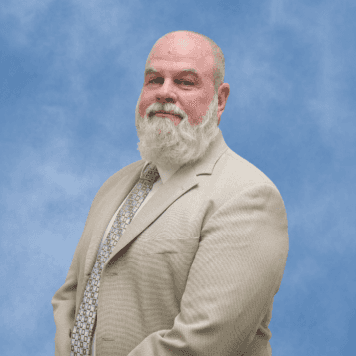
About Randall Blaum
BDC Director, Toyota Chula Vista
Randall Blaum is the BDC Director at Toyota Chula Vista and has spent 30+ years in the automotive business. His guides take a practical look at Toyota buying and ownership: what to compare, what to verify and what to ask before you decide.
Find Randall on LinkedIn and Substack.
In his August 14, 2026 interview, Randall said the gap between a loan payoff and a lower trade value does not disappear when the customer trades.
Toyota Chula Vista, 650 Main St, Chula Vista, CA 91911. Sales: 844-605-3339. Service: 844-490-1326.
0 comment(s) so far on Can I Trade In a Car I Still Owe Money On?