
Brake Service 101: The Anatomy of Toyota Brakes
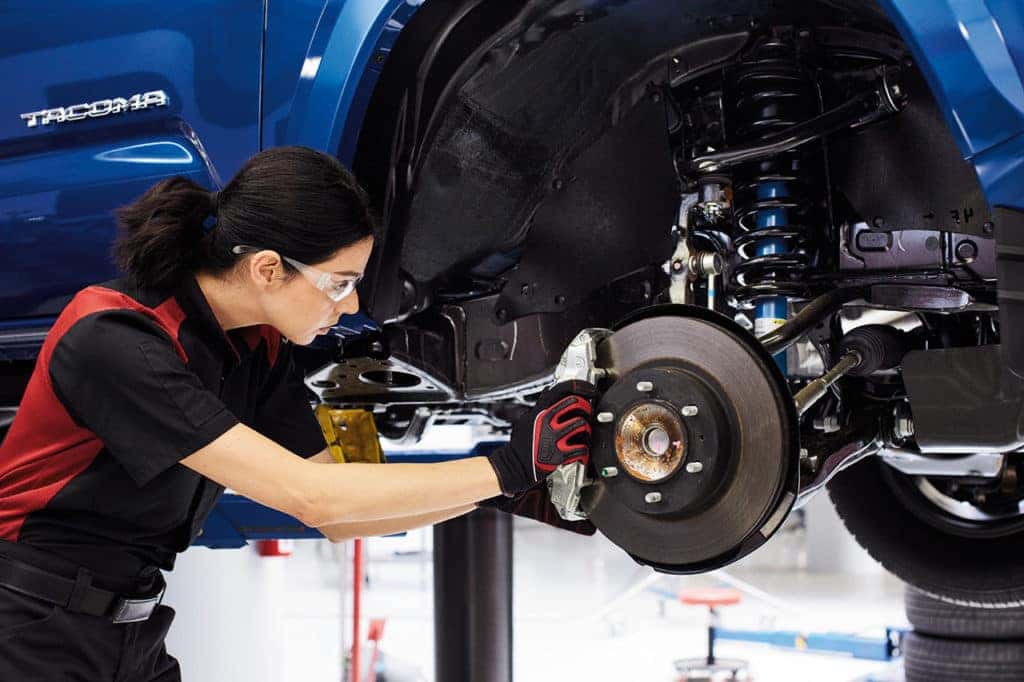 Responsible for bringing your Toyota car to a safe stop, your brake system is complex and multi-faceted. To perform at their best, your brakes must be maintained according to the regular brake service intervals outlined in your owner’s manual. Here’s an overview of how your brakes work, as well as all of the different components contained within the system.
How Do Brakes Bring Your Car to a Stop?
When you press down on your car’s brake pedal to come to a stop, a lot of different things happen under the hood. Put simply, a brake lever pushes a brake piston into the hydraulic cylinder, which is filled with fluid. In turn, this fluid gets moved along a system of brake lines into additional cylinders, which are positioned next to the brakes on each of the four wheels.
What are the Different Components in Your Brake System?
Your Toyota car’s brake system consists of many different Toyota parts, all working in harmony to keep you safe. The brake system components include:
- Brake pads: Brake pads are found only in disc brake systems, and they act as friction material that is squeezed against the wheel rotor to bring it to a stop.
- Brake calipers: Located at each wheel, brake calipers can be compared to a metal clamp. When you press down on the brake pedal, the brake fluid activates the pistons inside the caliper, activating the brake pads.
- Brake rotors: The brake rotor is attached to the wheel hub and rotates as the wheel spins. When the brake pads squeeze the rotors, the entire wheel stops moving.
We want to ensure that your every drive is safe. To learn more about how your brakes work or to schedule brake service on your Toyota car, visit Toyota of Chula Vista today.
0 comment(s) so far on Brake Service 101: The Anatomy of Toyota Brakes